Are you navigating NDIS housing options and confused about whether you need Medium Term Accommodation (MTA) or Specialist Disability Accommodation (SDA)? You’re not alone. Understanding the difference between MTA vs SDA NDIS housing can feel overwhelming, especially when you or a loved one needs accommodation support urgently.
The good news is that both options serve important, but very different, purposes in the NDIS housing continuum. MTA provides temporary, crisis accommodation when you need immediate housing support, while SDA offers long-term, specialized housing designed for people with extreme functional impairment or very high support needs.
This comprehensive guide will clarify the key differences between MTA and SDA, help you understand which option suits your current situation, and show you exactly how to access each type of accommodation in Greater Western Sydney and across NSW. Whether you’re facing an immediate housing crisis or planning for long-term specialized accommodation, understanding these options empowers you to make the right choice for your needs.
What is Medium Term Accommodation (MTA)?
Medium Term Accommodation (MTA) is temporary NDIS housing designed for participants experiencing crisis situations or transitioning between long-term accommodation options. Unlike permanent housing solutions, MTA provides a safe, supported environment for typically 90 days, though this can sometimes be extended to six months in certain circumstances.
MTA is funded through your Core Supports or Capacity Building budgets in your existing NDIS plan, you don’t need a special funding line item added. This makes MTA more accessible and faster to arrange than permanent housing options. Many people also refer to MTA as “transitional accommodation,” “interim housing,” or “bridge accommodation.”
When MTA is Used
Crisis Situations:
- Family or carer breakdown requiring immediate alternative accommodation
- Homelessness or imminent risk of homelessness
- Unsafe current living situation requiring urgent move
- Domestic violence or significant family conflict
- Eviction notice with nowhere else to go
- Emergency circumstances making current accommodation unsuitable
Transition Periods:
- Leaving hospital but home not yet suitable or ready for your return
- Moving from institutional care or aged care facilities to community living
- Waiting for SDA approval or searching for available SDA properties
- Transitioning between different long-term accommodation arrangements
- Trial period before committing to permanent housing options
Recovery and Assessment:
- Post-hospital recovery requiring a supported environment
- Assessment period to properly determine your long-term housing needs
- Building independent living skills before permanent placement
- Developing capacity and confidence for more independent accommodation
Key Characteristics of MTA
MTA is fundamentally a short-term solution, designed for weeks or months, not years. The accommodation typically comes furnished and includes some level of support services as part of the package, though this varies between providers. Support staff are available to varying degrees depending on your needs and the specific MTA service.
The primary focus of MTA is stabilisation and planning. While you’re in MTA, you and your support coordinator work together to plan your next steps, whether that’s returning home with modifications, moving to SDA, or exploring other suitable housing options.
Real-World Example: David was living with his elderly parents who could no longer provide the physical care he needed due to their own declining health. His support coordinator quickly arranged MTA placement while they applied for SDA funding and searched for suitable long-term accommodation. The 90-day MTA placement gave David a safe, supported environment with trained staff while planning his future housing. During this time, an occupational therapist assessed his needs, they applied for SDA funding, and began searching for properties in Western Sydney locations.
MTA Available in Western Sydney
MTA providers operate throughout Greater Western Sydney, with services available in Blacktown, Parramatta, Penrith, and surrounding regions. Many providers work to accommodate proximity to family and existing support networks when placing participants, recognising how important these connections are during difficult transitions.
What is Specialist Disability Accommodation (SDA)?
Specialist Disability Accommodation (SDA) is purpose-built, long-term housing specifically designed for NDIS participants with extreme functional impairment or very high support needs. Unlike MTA’s temporary nature, SDA provides a permanent accommodation solution, your home for as long as you need it and remain eligible.
SDA is funded through a specific SDA line item added to your NDIS plan after a formal assessment and approval process. This is separate from your other NDIS supports. The accommodation features specialised design elements, advanced accessibility features, and integrated assistive technology that standard housing, even accessible housing, simply cannot provide.
According to the NDIS official website, SDA is divided into four design categories: Improved Liveability (for sensory or intellectual disabilities), Fully Accessible (for significant physical disabilities requiring wheelchair access), Robust (for participants who may unintentionally damage property), and High Physical Support (for very high physical support needs with features like ceiling hoists and emergency systems).
When SDA is Appropriate
SDA becomes the right choice when you have long-term housing needs due to significant disability, and standard accessible housing isn’t suitable. This typically means you have extreme functional impairment or very high support needs that require specialized housing features to live as independently as possible.
You might need assistive technology throughout your home, emergency response systems, ceiling hoists for transfers, or environmental modifications that go well beyond standard accessibility. An occupational therapist assessment and NDIS approval are required to access SDA funding.
Key Characteristics of SDA
SDA is a long-term solution measured in years, not months. These are purpose-designed homes with advanced accessibility and technology integration. The higher funding reflects the specialized features and ongoing property management required.
Importantly, SDA is your home with full residential tenancy rights, not temporary accommodation. You have the same tenant protections as any other residential tenancy in NSW. It’s also crucial to understand that SDA is separate from support services. If you need Supported Independent Living (SIL) or other supports, you arrange these independently. For more information on this distinction, read our guide on the difference between SDA and SIL.
Brief Design Category Overview
- Improved Liveability: Designed for people with sensory, intellectual, or cognitive disabilities requiring better designed living spaces
- Fully Accessible: For wheelchair users and people with significant mobility impairments requiring fully accessible environments
- Robust: For participants who may unintentionally damage property, featuring reinforced materials and design
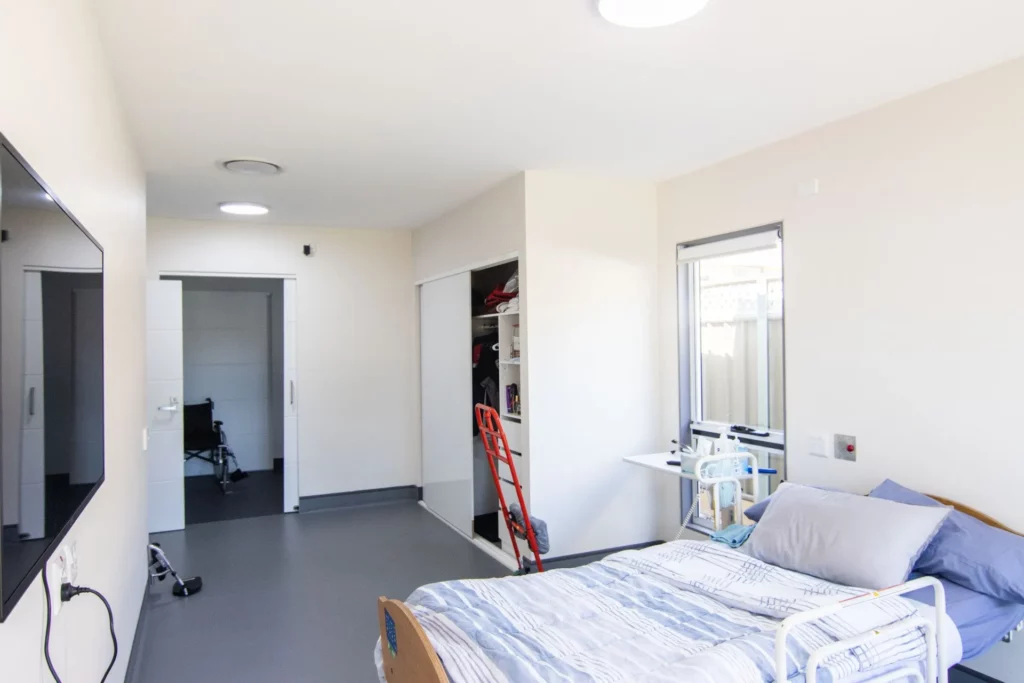
- High Physical Support: For people with very high physical support needs, featuring ceiling hoists, wide corridors, emergency systems, and advanced assistive technology
SDA Available in Western Sydney
There’s strong SDA availability across Greater Western Sydney, particularly in Lalor Park, Blacktown, and Parramatta. Sunrise SDA operates High Physical Support properties in Lalor Park, featuring modern design with ceiling hoists, voice-controlled smart home technology, and comprehensive emergency systems. The growing stock of purpose-built SDA across Western Sydney means participants have increasing options when searching for their long-term home.
For a comprehensive explanation of what SDA housing is, including detailed information about design categories and features, visit our complete SDA guide.
MTA vs SDA – Key Differences Explained
Understanding the core differences between MTA and SDA helps you identify which option matches your current needs. Here’s a detailed comparison of the key distinctions:
Duration
MTA: Short-term accommodation, typically 90 days, sometimes extended to six months in certain circumstances. This is temporary housing while you plan your next steps.
SDA: Long-term and permanent accommodation measured in years. This is your home for as long as you need it and remain eligible for SDA funding.
Key point: MTA is bridge accommodation that gets you through a crisis or transition period. SDA is the permanent solution, your long-term home.
Purpose
MTA: Provides crisis response, transition support, and a temporary solution while you stabilise your situation and plan long-term housing arrangements.
SDA: Offers permanent housing specifically designed to enable independent living with specialized features, accessibility, and technology integration.
Key point: MTA stabilises your immediate situation. SDA provides the specialized long-term solution for ongoing needs.
Eligibility
MTA: Available to any NDIS participant experiencing crisis, transition, or temporary housing need. You don’t need extreme functional impairment, just a demonstrated immediate need for temporary supported accommodation.
SDA: Reserved for NDIS participants with extreme functional impairment or very high support needs. Requires formal occupational therapist assessment and NDIS SDA approval demonstrating that standard housing isn’t suitable.
Key point: MTA has a lower eligibility threshold focused on immediate need. SDA requires a higher level of assessed disability-related housing needs.
Funding Source
MTA: Funded through your existing Core Supports or Capacity Building budgets in your NDIS plan. No special line item needed, uses your current plan funding.
SDA: Funded through a dedicated SDA line item that must be specifically added to your NDIS plan after assessment and approval. This is separate funding that doesn’t come from your other supports.
Key point: MTA uses existing plan funds you already have. SDA requires specific new funding approval from NDIS.
Application Process
MTA: Your support coordinator requests MTA through NDIS. In crisis situations, approval typically happens quickly, within days or weeks, because of the urgent need.
SDA: Requires occupational therapist assessment, formal application with detailed reports, NDIS review of your eligibility, and approval process. This typically takes three to six months from start to approval.
Key point: MTA is faster to access for immediate needs. SDA requires longer-term planning and a more comprehensive assessment process.
Cost to Participant
MTA: Varies by provider and situation. Often included in your support package, though you may pay a reasonable rent contribution depending on the arrangement and your income.
SDA: You pay a Reasonable Rent Contribution between $163 and $314 per fortnight based on your income (similar to other social housing). NDIS pays the SDA payment directly to the provider to cover the specialized housing costs.
Key point: Both involve participant contributions, but they’re structured differently and SDA has standardised Reasonable Rent Contribution amounts.
Support Services
MTA: Often includes some support services as part of the accommodation package. The level varies by provider, but MTA typically comes with at least some support staff availability.
SDA: Support services are completely separate from accommodation. You arrange Supported Independent Living (SIL) or other supports independently based on your needs. SDA is purely the housing.
Key point: MTA is more “bundled” with support. SDA clearly separates housing from support services, giving you more control over both.
Features & Design
MTA: Standard accessible housing that’s functional and suitable for various participants. Usually furnished and ready to move into, but not purpose-designed for specific disabilities.
SDA: Purpose-designed and built with advanced accessibility features, integrated assistive technology, emergency systems, and specialized design elements specific to your design category needs.
Key point: MTA provides adequate, accessible housing. SDA delivers optimized, specialized housing designed specifically for your disability-related needs.
Tenancy Rights
MTA: Temporary license agreement with limited tenancy rights because it’s short-term crisis accommodation, not permanent housing.
SDA: Full residential tenancy agreement with all standard tenant rights and protections under NSW tenancy law. This is your home with full legal protections.
Key point: MTA is temporary accommodation. SDA gives you the security and rights of a proper home tenancy.
Location Choice
MTA: Limited choice because you often need accommodation urgently. You may need to accept what’s available quickly in your region, though providers try to keep you near family and support networks.
SDA: Greater choice to find a property matching your preferences, location needs, and design category requirements, though options still depend on availability in your preferred area.
Key point: Crisis situations mean less immediate choice with MTA. SDA planning time allows you to search for the right property in your preferred location.
Quick Comparison: MTA vs SDA
| Feature | MTA | SDA |
|---|---|---|
| Duration | 90 days – 6 months | Long-term/permanent |
| Purpose | Crisis/transition | Independent living home |
| Eligibility | Crisis/transition need | Extreme functional impairment |
| Funding | Core/Capacity Building | Dedicated SDA line item |
| Process Time | Days-weeks | 3-6 months |
| Design | Standard accessible | Specialized categories |
| Support | Often included | Arranged separately |
| Choice | Limited (crisis) | Greater choice |
🏠 Planning for Long-Term SDA Housing?
If you’re currently in MTA or planning ahead for specialised long-term accommodation, Sunrise SDA can help you understand your SDA options in Western Sydney.
📞 Call 1300 71 06 71
✉️ info@sunriseda.com.au
We specialise in High Physical Support SDA in Lalor Park, let’s discuss your needs.
Which Option Do You Need?
Determining whether you need MTA or SDA depends on your current situation, the urgency of your housing need, and the permanence of your disability-related housing requirements. Here’s how to identify which option matches your circumstances:
You Likely Need MTA If:
Immediate Crisis Situations:
- Family or carer breakdown means you cannot safely stay where you are right now
- You’re experiencing an unsafe living situation requiring an immediate move
- You’re currently homeless or at imminent risk of homelessness
- Domestic violence situation requires you to leave urgently
- You’ve received an eviction notice with nowhere else to go
- An emergency has made your current accommodation suddenly unsuitable
Transition Periods:
- You’re leaving hospital but your home isn’t ready or suitable for your return
- You’re moving from aged care or an institutional setting to community living
- You’re waiting for SDA approval and need somewhere to stay in the meantime
- You’re between long-term accommodation options and need temporary gap housing
- You need time to properly assess what long-term housing will suit your needs
Assessment & Planning:
- You’re unsure what long-term housing arrangement you actually need
- You want to trial different living arrangements before making a permanent commitment
- You’re building independent living skills to prepare for more autonomous accommodation
- Your support coordinator is helping you develop a comprehensive long-term housing plan
Key Indicator: If you need housing RIGHT NOW and it’s temporary while you figure out the long-term plan, MTA is likely the appropriate option. MTA provides immediate stability and safety.
You Likely Need SDA If:
Long-Term Housing Needs:
- Your current housing is permanently unsuitable due to your disability and cannot be adequately modified
- You require specialized accessibility features that go well beyond standard accessible housing
- You need integrated assistive technology throughout your home for daily living
- Standard accessible housing simply doesn’t meet your support and accessibility needs
- You’re looking for your “forever home” or a genuine long-term housing solution
Functional Support Requirements:
- You have extreme functional impairment affecting multiple aspects of daily living
- You require ceiling hoists, emergency response systems, or specialized medical equipment infrastructure
- You have very high physical support needs requiring a purpose-built environment
- You have significant mobility impairment requiring fully accessible design throughout
- You have cognitive or sensory needs requiring improved liveability features
- You may unintentionally impact property and require robust, reinforced design
Eligibility Met:
- An occupational therapist has formally assessed your housing needs
- The OT report supports and recommends your need for SDA funding
- NDIS has approved, or you’re confident they will approve, your SDA funding application
- You clearly meet the eligibility criteria for one of the four SDA design categories
Key Indicator: If you need permanent, specialized housing due to significant disability-related needs and standard housing isn’t suitable, SDA is likely the appropriate option. SDA is about long-term quality of life in a home designed for your specific needs.
Can You Have Both?
Yes, and this is actually a common and appropriate pathway. You can use MTA and SDA sequentially, with MTA providing crucial stability during the transition to SDA.
Sequential Path:
- Start in MTA due to immediate crisis or while waiting for SDA approval
- MTA provides safety and stability while your SDA application processes
- Use the MTA period productively, complete OT assessments, submit applications, search for suitable SDA properties
- Transition directly from MTA to SDA once your funding is approved and you’ve found the right property
- This is a common and well-established pathway for participants moving from crisis to stable, long-term housing
Example Journey: Sarah experienced sudden family breakdown requiring immediate accommodation, so her support coordinator arranged MTA placement within days. While living safely in MTA, her support coordinator applied for SDA funding, organised a comprehensive occupational therapist assessment, and began searching for suitable High Physical Support properties in Western Sydney. After four months in MTA, during which her SDA funding was approved, Sarah transitioned into a purpose-built High Physical Support home in Lalor Park. This is now her permanent home, equipped with ceiling hoists, voice-controlled technology, and emergency systems. The MTA bridged the gap between crisis and long-term solution perfectly.
How to Access MTA in NSW (Western Sydney Focus)
Accessing Medium Term Accommodation requires quick action, especially in crisis situations. Here’s exactly how to access MTA in Greater Western Sydney:
Step 1: Contact Your Support Coordinator Immediately
Your support coordinator should be your first point of contact for MTA assistance. Explain your crisis or transition situation clearly, including why you need immediate accommodation and what’s making your current housing unsuitable or unsafe.
Your support coordinator will assess the urgency of your situation, determine if MTA is the appropriate response, and can initiate the MTA request with NDIS very quickly, often within hours in genuine crisis situations.
Step 2: NDIS Request for MTA
Your support coordinator submits a formal request to NDIS Medium Term Accommodation explaining your situation and why MTA is needed. In crisis situations, NDIS often approves requests within days because they recognise the urgent need for safe accommodation.
You may need to provide supporting documentation such as an eviction notice, hospital discharge papers, or other evidence demonstrating your immediate housing need, depending on your specific circumstances.
Step 3: MTA Provider Matching
Once approved, your support coordinator contacts MTA providers in your region who have current vacancies. Location preferences are considered where possible, providers understand the importance of keeping you near family, existing support networks, and familiar services.
Matching also considers your specific support needs, compatibility with other residents (if applicable), and any special requirements you have. In genuine crisis situations, however, you may need to accept the first available appropriate placement.
Step 4: Move-In & Support Planning
MTA providers typically arrange move-in very quickly, sometimes within 24-48 hours in emergencies. Once you’re settled, the provider assesses your immediate support needs and goals for your time in MTA.
Crucially, you and your support coordinator develop a plan for what happens next. MTA isn’t just temporary housing, it’s a planning period. You’ll have regular reviews to work towards your long-term housing solution, whether that’s SDA, returning home with modifications, or another suitable option.
MTA Providers in Greater Western Sydney
Blacktown & Surrounding Areas:
Multiple MTA providers operate throughout the Blacktown region, offering proximity to Blacktown Hospital, community services, and excellent public transport via the T1 Western Line. The culturally diverse support options in Blacktown accommodate the needs of the multicultural Western Sydney community, and connectivity via train and bus makes it easy to maintain connections with family and services.
Parramatta Region:
As the central hub of Western Sydney, Parramatta has a strong MTA provider network with proximity to extensive medical services, community support organisations, and the major transport hub connecting to all of Greater Sydney. This central location is ideal for maintaining service connections.
Penrith & Blue Mountains:
Regional MTA options are available throughout Penrith and the lower Blue Mountains, offering community-based providers with a balance of service accessibility and a more relaxed, neighbourhood environment.
Mount Druitt, Lalor Park, & Surrounding Suburbs:
Local MTA services operate in Mount Druitt, Lalor Park, and surrounding suburbs, making it possible to stay in your immediate local area. Family proximity is often achievable in these locations, and the established disability support infrastructure throughout this region provides good access to ongoing services.
Key Point: In crisis situations, you may need to accept whatever MTA placement is available regardless of perfect location preference, your immediate safety and stability are the priority. However, providers genuinely try to keep you near family and support networks whenever possible because they understand how important these connections are during difficult times.
If You Don’t Have a Support Coordinator
If you don’t currently have a support coordinator but need MTA urgently, contact the NDIS directly on 1800 800 110. Explain your crisis situation clearly and request both support coordinator assistance and MTA help. In many cases, your Local Area Coordinator (LAC) can provide immediate crisis response support and help coordinate MTA while arranging a longer-term support coordinator for you. Don’t let lack of a support coordinator stop you from seeking help, contact the NDIS and they will guide you through the process.
How to Access SDA in NSW (Western Sydney Focus)
Accessing Specialist Disability Accommodation requires planning and patience, this isn’t an emergency process. Here’s exactly how to access SDA funding and find suitable properties in Greater Western Sydney:
Step 1: Confirm Eligibility with Support Coordinator
Begin by discussing with your support coordinator whether SDA might be appropriate for your situation. Together, assess whether you likely meet the eligibility criteria for extreme functional impairment or very high support needs.
Understand from the outset that this is not an immediate process. SDA applications typically take three to six months from initial assessment through to approval and finding a suitable property. This timeline requires planning and patience.
Step 2: Occupational Therapist Assessment
The OT assessment is the critical foundation of any SDA application. An occupational therapist conducts a comprehensive evaluation of your functional capacity, current housing situation, and specific housing needs related to your disability.
The OT produces a detailed report documenting why you need SDA, which design category is most appropriate for your needs (Improved Liveability, Fully Accessible, Robust, or High Physical Support), and what specific features are necessary for you to live as independently as possible. This report must be thorough and evidence-based, as NDIS relies heavily on it when determining eligibility. The cost of the OT assessment is typically covered through your Capacity Building budget.
Step 3: Apply for SDA Funding in NDIS Plan
Submit the OT report to NDIS along with a plan review request. You may need additional supporting documentation from medical professionals, therapists, or current care providers. NDIS reviews your application thoroughly to determine whether you meet the eligibility criteria for SDA funding.
If approved, NDIS adds an SDA line item to your NDIS plan. The funding amount is determined by your assessed design category, the location (urban vs regional pricing), and whether you’ll live alone or share accommodation. This is separate funding that doesn’t reduce your other NDIS supports. For more detailed guidance on this process, see our detailed guide to getting SDA funding approved.
Step 4: Search for Available SDA Properties
Primary Search Methods:
- NDIS Housing Hub: The official database of available SDA properties across Australia at NDIS Website. Search by location, design category, and vacancy status.
- Contact SDA Providers Directly: Reach out to SDA providers operating in your preferred area. In Western Sydney, providers like Sunrise SDA can inform you about current and upcoming vacancies.
- Support Coordinator Assistance: Your support coordinator often knows local providers, upcoming developments, and current vacancies before they’re widely advertised.
- OT Recommendations: Your occupational therapist may suggest specific providers known for quality properties in your required design category.
Western Sydney SDA Availability & Locations
Lalor Park (Strong Focus):
Sunrise SDA operates modern, purpose-built High Physical Support properties in Lalor Park, featuring integrated smart home technology as standard, not as an optional extra. Our properties include ceiling hoists, voice-controlled doors and lighting, emergency alert systems, and comprehensive accessibility throughout.
Lalor Park is conveniently located just 5 kilometres from Blacktown and 15 kilometres from Parramatta, providing excellent access to major services and transport. Blacktown Station on the T1 Western Line is easily accessible, Westfield Blacktown is only 10 minutes away, and Blacktown Hospital is nearby. The established, multicultural community offers strong disability services infrastructure.
Contact Sunrise SDA for Lalor Park vacancies:
📞 1300 71 06 71
✉️ info@sunriseda.com.au
🏠 1 Gardenia Grove, Lalor Park, NSW 2147
Blacktown:
Growing SDA property stock throughout Blacktown provides excellent choice. As a major transport hub on the T1 Western Line, Blacktown offers outstanding connectivity. With Blacktown Hospital, medical facilities, large shopping centres like Westfield Blacktown, and extensive community services, it’s a practical location with a mix of group homes, apartments, and standalone houses across various design categories.
Parramatta:
As a premium Western Sydney location, Parramatta sits at the centre of the entire region with exceptional transport connections. The Westmead Hospital complex provides world-class medical services, while urban amenities and employment opportunities are abundant. SDA in Parramatta includes both apartment and house options, though costs are typically higher than outer suburbs due to the central location and accessibility advantages.
Penrith:
Located at the gateway to the Blue Mountains, Penrith has an established SDA provider presence with good proximity to Nepean Hospital. The area balances access to services with community atmosphere, and SDA options are typically at slightly lower cost than more central areas like Parramatta.
Mount Druitt:
An affordable Western Sydney option, Mount Druitt offers good transport via the T1 Western Line and growing SDA developments. Mount Druitt Westfield provides comprehensive shopping, and community-focused neighbourhoods create a welcoming environment.
For more detailed information about specific properties and suburbs, explore our guide to SDA housing options in Lalor Park and Greater Western Sydney, or read our broader overview of SDA accommodation options across Sydney and NSW.
Step 5: Property Inspections & Selection
Visit multiple properties to compare features, location, and provider quality. Bring your family, support coordinator, and ideally your occupational therapist if possible, multiple perspectives help you make the best choice.
Assess the design features against your specific needs, evaluate the neighbourhood and proximity to services, check provider responsiveness and property maintenance quality, and for group homes, carefully consider compatibility with potential housemates. When inspecting properties, use our property inspection checklist to ensure you evaluate all important factors.
Step 6: Application & Move-In
Apply to the SDA provider for your chosen property. The provider assesses your suitability and compatibility (particularly important for shared accommodation). Once approved, you sign a residential lease agreement with full tenancy rights and protections.
If you need Supported Independent Living (SIL) or other support services, arrange these separately, SDA is purely the housing. Finally, coordinate your move-in date with your support coordinator to ensure smooth transition, including any necessary equipment installation or modifications.
Timeline Reality
The entire SDA process typically takes three to six months from initial OT assessment through to moving into your new home. The timeline can be longer if suitable vacancies are limited in your preferred area and design category.
Start searching for properties before your SDA approval if you’re confident approval is likely, this can reduce waiting time. However, understand that SDA is not designed for crisis situations. If you need immediate housing, MTA is the appropriate pathway, potentially followed by transition to SDA once your funding is approved.
🌟 Explore SDA Properties in Lalor Park
Visit our purpose-built High Physical Support homes featuring:
- ✅ Ceiling hoists & emergency systems
- ✅ Voice-controlled smart home technology
- ✅ Close to Blacktown & Parramatta
- ✅ Modern, accessible design
- ✅ T1 Western Line train access nearby
🏠 1 Gardenia Grove, Lalor Park, NSW 2147
📞 1300 71 06 71 | ✉️ info@sunriseda.com.au
Schedule an obligation-free property tour.
Common Scenarios: MTA to SDA Pathways
Understanding real-world scenarios helps you recognise how MTA and SDA work together in participants’ housing journeys. Here are common pathways:
Scenario 1: Family Breakdown Leading to Long-Term Housing
Immediate response: MTA placement arranged within days due to family carer burnout and breakdown in care arrangements. Participant needs immediate safe accommodation.
During MTA: Support coordinator initiates comprehensive occupational therapist assessment. OT report completed documenting need for High Physical Support SDA. Application submitted to NDIS for SDA funding.
Transition: After four to five months, SDA funding approved. Support coordinator identifies suitable High Physical Support property in Lalor Park. Participant transitions from MTA directly to permanent SDA home.
Outcome: Stable, permanent housing with ceiling hoists, smart technology, and emergency systems perfectly suited to participant’s ongoing needs. MTA provided crucial stability during the transition period.
Scenario 2: Hospital Discharge Requiring Assessment
Immediate response: Patient cannot return home immediately post-hospital. MTA arranged for post-hospital recovery and comprehensive needs assessment in supported environment.
During MTA: Trial different levels of support to properly determine requirements. Assess whether specialized housing truly necessary or if home modifications sufficient. Occupational therapist observes participant in daily living to inform recommendations.
Decision: Evidence-based determination made about whether SDA necessary or if alternative NDIS housing options more appropriate based on actual observed needs.
Outcome: Informed decision rather than rushed choice. If SDA appropriate, transition proceeds. If not, other suitable options pursued. MTA provided assessment time.
Scenario 3: Homelessness & Crisis
Immediate response: MTA provides immediate safe, supported accommodation for participant experiencing homelessness and crisis situation.
During MTA: Stabilise immediate situation and address urgent needs. Conduct proper assessment of capacity, support needs, and suitable long-term housing options. Build participant’s confidence and skills.
Exploration: If eligible after assessment, apply for SDA funding. If not eligible for SDA, explore other NDIS housing and support options appropriate to assessed needs.
Outcome: Clear pathway from crisis to sustainable, appropriate long-term housing. MTA prevented continuation of homelessness while proper planning occurred.
Scenario 4: Waiting for SDA Approval or Vacancy
Situation: Participant’s SDA funding already approved by NDIS, but no suitable vacancy currently available in preferred design category or location.
Bridge solution: MTA provides safe accommodation while actively searching for the right SDA property. Prevents homelessness or unsuitable temporary arrangements during property search.
Duration: May be several months depending on availability in specific Western Sydney location and required design category. Participant has time to find the right property rather than settling for unsuitable first option.
Outcome: MTA bridges the gap between SDA approval and move-in, ensuring participant remains safely housed throughout the transition process.
Key Message: MTA and SDA aren’t competing options, they serve fundamentally different purposes and often work together beautifully in a participant’s housing journey. MTA provides immediate stability and safety when you need it most. SDA provides the long-term specialized solution designed for your ongoing needs. Many participants successfully use MTA as the bridge to SDA, and this pathway is not only common but often ideal.
Wrap-Up
Understanding the difference between MTA vs SDA NDIS housing empowers you to access the right support at the right time. MTA provides essential temporary accommodation during crisis or transition periods, typically 90 days while you stabilise and plan your next steps. SDA offers permanent, specialized housing designed specifically for people with extreme functional impairment or very high support needs, your long-term home with advanced accessibility and technology.
Both options play vital roles in the NDIS housing continuum. MTA responds to immediate needs with speed and support. SDA provides the specialized long-term solution that enables independent living with dignity. Recognising which option matches your current situation helps you navigate the system effectively and access appropriate support.
Many NDIS participants follow a natural pathway from MTA to SDA, using temporary accommodation as a bridge to permanent specialized housing. This sequential approach is common, appropriate, and often the ideal way to transition from crisis to stability to long-term quality of life.
Clear Next Steps Based on Your Situation
If You’re in Crisis Right Now:
- Contact your support coordinator immediately, don’t wait
- Request MTA assistance and explain your urgent situation
- Accept available MTA placement to ensure your immediate safety
- Use the MTA period to plan your long-term housing solution properly
If You Need Long-Term Specialized Housing:
- Talk to your support coordinator about whether SDA might be appropriate for your needs
- Request a comprehensive occupational therapist assessment
- Begin the SDA application process with realistic timeline expectations
- Research available SDA properties in your preferred Western Sydney locations, Lalor Park, Blacktown, Parramatta
- Contact SDA providers like Sunrise SDA to understand your options and view properties
If you’re interested in learning more about different types of SDA living arrangements, explore our guide to SDA group home living, or read our comprehensive SDA housing guide for detailed information about all aspects of specialist disability accommodation.
🏡 Ready to Explore Long-Term SDA Housing in Western Sydney?
If you’ve determined SDA is the right long-term housing solution for your needs, Sunrise SDA specialises in High Physical Support accommodation with advanced smart home technology in Lalor Park.
✅ Purpose-built properties in Greater Western Sydney
✅ Modern design with ceiling hoists, voice control, emergency systems
✅ Close to Blacktown, Parramatta services & transport
✅ Expert guidance through SDA application process
✅ Obligation-free consultations and property tours
📞 Call 1300 71 06 71
✉️ info@sunriseda.com.au
🏠 Visit: 1 Gardenia Grove, Lalor Park, NSW 2147
🌐 sunriseda.org
Whether you’re currently in MTA and planning your next step, or beginning your SDA journey, we’re here to help you find the right long-term home.