Smart home systems are transforming Specialist Disability Accommodation (SDA) by integrating assistive technology that empowers NDIS participants. Modern SDA homes, built to NDIA and LHA Platinum standards, embed devices and automation at their core. With a single voice command or app, residents can open doors, adjust lighting and temperature, control blinds, or even raise the height of kitchen benches.
These features support daily tasks and safety. Built-in intercoms and wearable call buttons let residents alert carers instantly in an emergency. Homes like Gardenia Grove and Northcott Road already offer full smart functionality – voice-activated locks, lights and HVAC, automated blinds, plus ceiling and mobile hoists and emergency alerts by button. These innovations make the home environment highly accessible, giving residents unprecedented independence and control.
Smart SDA Homes in Practice
At Sunrise Disability Accommodation, our SDA group homes illustrate this shift clearly. Gardenia Grove in Lalor Park was designed “with smart home technology at its core,” allowing residents to use voice commands (via Amazon Alexa or Google Home) to open/lock doors, adjust lighting and blinds, set the air-conditioning, and call family or carers. Similarly, 141 Northcott Road is “fully equipped with advanced assistive technologies” – a 1500 mm ramp and hoists ensure physical access, while voice control manages doors, lights and temperature. Both homes include emergency alert systems so help is only a button-press away.
- Voice-activated control: Residents speak to devices to manage home systems without physical effort.
- Automated lighting & climate: Smart lights and thermostats adapt to routines, enhancing comfort and safety.
- Motorized fixtures: Electric blinds, windows and doors open hands-free. Counters and cooktops can even adjust height by voice.
- Intercom & remote access: Visitors are vetted via video intercom; doors can be unlocked remotely for deliveries or carers.
- Emergency systems: Pendant or wall-mounted call buttons, plus fall-detection wearables, ensure help is summoned quickly.
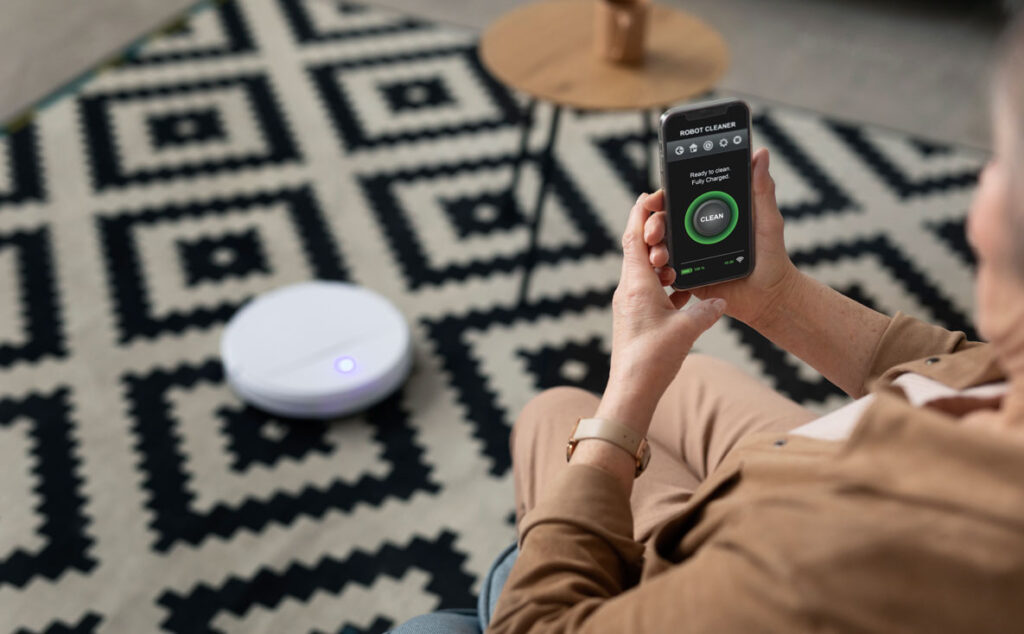
Modern systems integrate devices through the Internet of Things (IoT). For example, a smart home hub might tie together voice assistants, lights, and security, so one command (“good night”) can lock doors, turn off lights, and set the alarm simultaneously. SDA homes now embed voice-activated systems for lighting, temperature controls, and appliances to give tenants greater autonomy. Automated doors, windows, and blinds make navigation far easier for people using wheelchairs or walkers.
Learn more about SDA design standards on our SDA Resources page and via the NDIS home and living support guidelines.
Key Assistive Technologies in NDIS Smart Homes
Smart home devices in SDA broadly fall into several categories:
- Voice Assistants: Devices like Amazon Echo, Google Home or Apple HomePod allow residents to control lights, temperature, appliances, and call for help with a simple voice command. This improves independence for residents with mobility or dexterity limitations.
- Automated Lighting & Blinds: Smart bulbs, switches, and motorized shades enable hands-free control, improving safety and accessibility.
- Climate and Appliance Control: Smart thermostats and outlets allow residents to adjust heating/cooling and appliances remotely or via voice, enhancing autonomy.
- Safety & Security Systems: Smart locks, cameras, alarms, and smoke detectors integrate with home hubs to provide real-time alerts and monitoring.
- Emergency & Health Monitoring: Personal emergency response systems, wearable fall detectors, and scheduled medication dispensers notify carers or emergency services immediately if needed.
These devices are interconnected through a central hub or internet network, creating an environment that anticipates residents’ needs. Learn more about assistive technologies via the National Disability Services website.
Safety, Monitoring and Emergency Support
Safety is a priority in SDA design. Beyond automation, smart homes include proactive security: exterior motion-sensor lighting, video monitoring, and alarms provide 24/7 protection. Inside, Personal Emergency Response Systems (PERS) allow residents to summon help instantly. Voice assistants can also trigger emergency alerts. Advanced systems may incorporate AI-powered fall detection to ensure immediate response.
This integration ensures residents enjoy both independence and peace of mind, knowing that carers or emergency services are accessible whenever needed.
Benefits for Independent Living
Smart homes boost independence, safety, and quality of life for NDIS participants:
- Greater Autonomy: Residents can perform daily tasks themselves, from cooking to entertainment, without relying on caregivers.
- Enhanced Safety: Automation reduces hazards. Motion-sensitive lighting and alarms detect falls or emergencies faster.
- Improved Well-being: Personalized environments (lighting, temperature, and connectivity) enhance comfort and reduce isolation.
- Better Health Management: Wearables and smart home monitors track vitals, medication schedules, and alert carers when needed.
NDIS funding often covers assistive technology that increases independence. Devices aligned to a participant’s goals may be funded under their plan. Learn more on the NDIS funding for assistive technology page.
Emerging Innovations in SDA Smart Homes
Future SDA homes will increasingly integrate AI and machine learning:
- Systems that learn residents’ routines and adjust lighting, temperature, and devices automatically.
- AI-driven fall detection and health monitoring.
- Advanced wearables linked to home networks for emergency notifications.
- Smart appliances that self-diagnose and adjust.
- Integration with robotics and AR/VR therapy tools for rehabilitation.
High-speed 5G/6G connectivity and robust home networks will further enable these technologies, creating environments that are predictive, responsive, and fully accessible.
Comparison: Smart SDA vs Traditional Accommodation
| Feature | Traditional SDA | Smart SDA (Sunrise DA) |
|---|---|---|
| Daily Task Independence | Limited, reliant on carers | Voice/automation enables autonomy |
| Safety Monitoring | Manual, ad hoc | 24/7 sensors, alerts, AI fall detection |
| Climate & Lighting | Manual switches | Automated, programmable, voice-controlled |
| Accessibility | Standard ramps, doorways | Motorized doors, adjustable counters, IoT integration |
| Emergency Response | Carer-dependent | Pendant, wall buttons, voice triggers, AI monitoring |
Frequently Asked Questions (FAQ)
Q1. What is a “smart home” in SDA?
A smart SDA home integrates assistive technology, IoT, and automation to support residents’ independence, safety, and quality of life.
Q2. Which SDA homes at Sunrise have smart technology?
Gardenia Grove and Northcott Road are fully equipped with voice-controlled lighting, blinds, doors, climate control, and emergency alert systems.
Q3. Does NDIS fund smart home technology?
Yes. Technology that aligns with a participant’s independence goals may be funded under their NDIS plan. Learn more on the NDIS assistive technology guide.
Q4. How does smart technology improve safety?
Automated lights, motion sensors, security cameras, and AI fall detection ensure hazards are minimized and help is immediately accessible.
Q5. Can smart homes be customised for individual needs?
Absolutely. Each home integrates devices based on resident mobility, safety requirements, and personal preferences.
Glossary
- SDA (Specialist Disability Accommodation): Purpose-built housing for people with high support needs.
- NDIS: National Disability Insurance Scheme – supports Australians with disability.
- Voice Assistant: Smart device that responds to spoken commands (e.g., Alexa, Google Home, Siri).
- IoT (Internet of Things): Network of connected devices that communicate and automate actions.
- PERS: Personal Emergency Response System – wearable or wall-mounted alert devices.
- Assistive Technology: Devices designed to increase independence and accessibility.
Conclusion & CTA
Smart home technology is revolutionising SDA by providing future-ready, independent living environments. At Sunrise Disability Accommodation, we combine modern smart technology with supportive design, helping NDIS participants live safely, independently, and comfortably.
📞 Call us: 1300 71 06 71
📧 Email: info@sunriseda.com.au
Explore more SDA insights on our Blog and learn about NDIS accommodation types.